

Context
According to the European Commission, plastic pellet loss is the third-largest source of unintentionally released microplastics in the EU and the second-largest direct source of microplastics in the seas, with billions of units reaching the ocean every year.
This affects not only flora and fauna, but also tourism and the local economy: in 2023, a maritime accident caused the release of millions of pellets onto the northern coasts of Spain, resulting in severe environmental and social damage.
Plastic pellet loss stems from inadequate management practices throughout the entire supply chain: from production to recycling, master batching, compounding, conversion, transport (including maritime transport), storage, and cleaning of plastic pellet containers and tanks.
For this reason, and considering the IMO Marine Environment Protection Committee circular MEPC.1/Circ.909 published in 2024 containing recommendations for the maritime transport of plastic pellets, the Commission issued Regulation 2025/2365 on the prevention of plastic pellet loss to reduce microplastic pollution.
Who does it apply to?
The regulation applies to:
- economic operators handling plastic pellets in the Union in quantities equal to or above a threshold of 5 tonnes in the previous calendar year;
- economic operators operating installations in the Union for the cleaning of plastic pellet containers and tanks;
- EU carriers and non-EU carriers transporting plastic pellets in the Union; and
- shippers and operators, agents and masters of seagoing vessels transporting plastic pellets in freight containers leaving or calling at a port of a Member State.
What are the obligations?
The obligations of the entities concerned can be summarised in three points:
- Prevention and management of pellet loss: through the development (and updating) of a risk management plan for each facility, the installation of adequate equipment, and the implementation of the procedures described in the risk management plan, which must be notified to the competent authorities.
- Notification of facilities and transport activities: economic operators must notify the competent Member State of each facility they manage, indicating whether the quantity of pellets handled is below, equal to, or above 1,500 tonnes/year. Notifications must be updated in case of changes to the information.
- Providing information downstream in the supply chain: manufacturers, importers, downstream users or distributors placing on the market plastic pellets that are synthetic polymer microparticles must affix the following pictogram and text on the label, packaging, leaflet or safety data sheet:
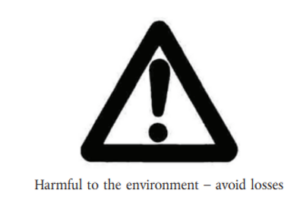
The text must be in the official language(s) of the Member State(s) in which the plastic pellet is placed on the market. The information must be clear, indelible and legible.
What are the application dates of the regulation?
- EU Regulation 2025/2365 enters into force on 17 December 2025: every operator must prevent the release of plastic pellets into the environment.
- Notification of facilities and transport activities, as well as the pictogram and label text, become mandatory on 17 October 2027.
- A temporary derogation is provided for shippers, operators, agents and masters of seagoing vessels, to whom the regulation applies from 17 December 2028.
Additional useful information
By 17 December 2026, the European Commission will publish appropriate guidance and training materials to support compliance with the regulation.
Full text of the regulation: https://eur-lex.europa.eu/legal-content/EN/TXT/PDF/?uri=OJ:L_202502365